License Plate Readers Don’t Need License Plates Anymore
ALPR networks are evolving from plate lookup tools into searchable vehicle-fingerprint and movement-correlation infrastructure. The privacy problem is no longer just the plate. It is the metadata around your mobility.
Automated license plate readers were already creepy enough when the pitch was simple: cameras read plates, police search plates, bad guy gets caught, everybody claps.
That was the brochure version.
The more honest version is that camera networks become searchable mobility databases. And now the plate may not even be the whole point.
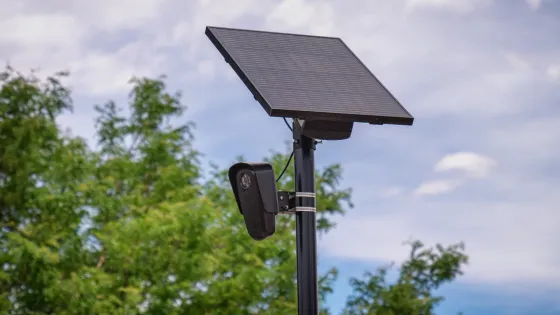
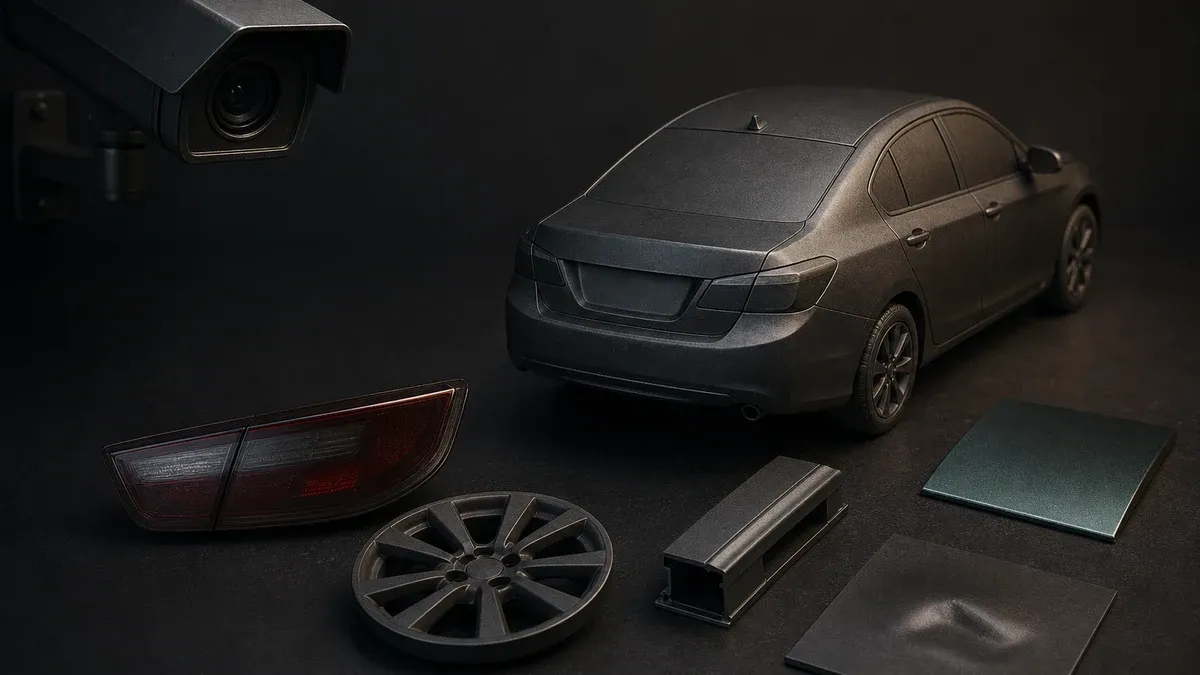
Schneier flagged reporting on Flock’s “Vehicle Fingerprint” capability: officers can reportedly search not only plate data, but details like decals, bumper stickers, racks, temporary tags, and other visual identifiers. The sales line is obvious: more ways to find a vehicle even when you do not have complete plate information.
Translation: your car is becoming a device fingerprint with wheels.
What happened
According to Schneier’s writeup, Flock’s system is presented as a way for law enforcement to identify vehicles using visible characteristics beyond the license plate. The quoted material says officers can use these identifiers to “build stronger cases with less information upfront,” locate vehicles believed to be moving together, and perform “multi geo search.”
That last part matters.
A single camera is a camera. A networked camera system with searchable metadata, historical records, movement correlation, and vehicle grouping is infrastructure.
And infrastructure has a habit of growing past the use case that sold it.
Who benefits
The obvious beneficiaries are police departments and surveillance vendors.
Police get more searchable history with less upfront certainty. Vendors get recurring government contracts and a bigger reason for every town, campus, HOA, and business district to join the network. The sales pitch is always safety. Sometimes that is even sincere. Sincerity does not make a dragnet harmless.
The deeper incentive is simple: once the cameras exist, the system wants more coverage, more retention, more sharing, more integrations, and more search types. Nobody buys a surveillance network and then says, “Actually, let’s make this less searchable.”
The trick
The trick is category shrinkage.
Call it a “license plate reader” and normal people picture a narrow tool: plate in, plate out. That sounds limited. Maybe acceptable. Maybe even boring.
But the real product category is mobility intelligence.
Decals. Racks. Damage. Temporary tags. Travel patterns. Vehicles moving together. Areas visited. Times of day. Repeat routes.
That is not just “reading a plate.” That is building a searchable map of how people move through physical space.
The legal win is not enough
EFF recently covered Chatrie v. United States, where the Supreme Court recognized that location data can reveal private matters and that even shorter-term location surveillance can trigger Fourth Amendment protection. Good. Take the win.
But do not confuse a court ruling with a privacy lifestyle.
Legal protection is the floor. Your daily exposure is still shaped by the apps you install, the data brokers buying location exhaust, the cameras your city buys, the retention rules nobody reads, and the quiet sharing agreements signed before the public notices.
The courts can say location data deserves constitutional protection while your town installs cameras that make routine movement searchable by default. Both can be true. Reality is rude like that.
Why this matters
Movement is intimate.
Where you worship, who you visit, what doctor you see, which meetings you attend, where you spend the night, which protests you pass, which neighborhoods you frequent — location data has a way of telling the truth even when you never typed it into a search box.
A vehicle-fingerprint system makes physical-world tracking less dependent on one clean identifier. No readable plate? Use stickers. Use racks. Use patterns. Use companion vehicles. Use the fact that nobody else in the area drives the same dented silver truck with the same roof box and the same stupid decal.
The surveillance state does not need omniscience. It needs enough correlation to make anonymity expensive.
What to watch next
Watch for four things:
- Retention creep — thirty days becomes ninety, then a year, then “as needed.”
- Sharing creep — local searches become regional networks, then national access, then private-public data swaps.
- Search creep — plate lookup becomes description search, pattern search, group movement search, and “suspicious behavior” flags.
- Purpose creep — violent crime justification becomes traffic enforcement, code enforcement, immigration, debt collection, protest monitoring, or whatever the next panic authorizes.
The control pattern is boring because it is reliable: emergency tool becomes routine tool. Routine tool becomes platform. Platform becomes dependency.
Practical exits
You are not going to solve this by putting tape over every traffic camera like a cartoon anarchist. Do not be stupid. Do not break the law.
Do this instead:
- Find out what your city bought. Search city council minutes, police procurement records, campus safety contracts, and local news for Flock, ALPR, automatic license plate reader, “real-time crime center,” and camera sharing agreements.
- Ask boring questions publicly. Retention period? Sharing partners? Audit logs? Warrant requirements? Hotlist sources? Error handling? Who can search? Can searches be run by description? Are companion-vehicle searches enabled?
- Push narrow rules. Short retention, public transparency reports, warrant requirements for historical search, no federal/out-of-state sharing without legal process, and real penalties for misuse.
- Reduce phone location exhaust too. The car is only one signal. Disable background location for apps that do not need it. Delete location history. Avoid apps whose location demand is obviously fake.
- Do not voluntarily make yourself more trackable. If you care about low-profile mobility, maybe skip the giant unique decals, vanity accessories, and unnecessary identifiers. You do not need to turn your car into a rolling social media bio.
None of this requires paranoia. It requires refusing to treat every “safety” dashboard as harmless just because the interface is clean and the sales rep used the word community.
The license plate was the obvious identifier. The system is learning to use everything else.
Own your tools. Own your data. Stop letting cameras rent your movement history back to the authorities.
Sources
- https://www.schneier.com/blog/archives/2026/07/flock-cameras-can-surveil-cars-without-license-plates.html
- https://www.eff.org/deeplinks/2026/06/victory-supreme-court-says-constitution-protects-peoples-location-data
- https://www.schneier.com/blog/archives/2026/07/cybersecurity-mission-creep-in-the-us.html